Якщо Ви живете на 8-му, 12-му або 16-му поверсі — Ви точно знаєте цю ситуацію. Світло вимкнули, і за кілька хвилин із крана починає текти тоненька цівка, а потім нічого. Бо насоси, які піднімають воду на верхні поверхи, працюють від електрики. Немає струму — немає тиску — немає води. Саме для таких випадків у квартиру монтують накопичувальний резервуар води.
У багатоповерховому будинку вода не надходить самопливом — її піднімають насосні станції, розташовані в підвалі або техповерсі. Ці насоси споживають електроенергію. Щойно відбувається відключення світла — насоси зупиняються, тиск у системі падає, і вода перестає надходити на верхні поверхи.
Мешканці перших двох-трьох поверхів цього майже не відчувають, їм вистачає залишкового тиску з магістралі. А от усе, що вище п’ятого поверху, у момент відключення залишається без води повністю.
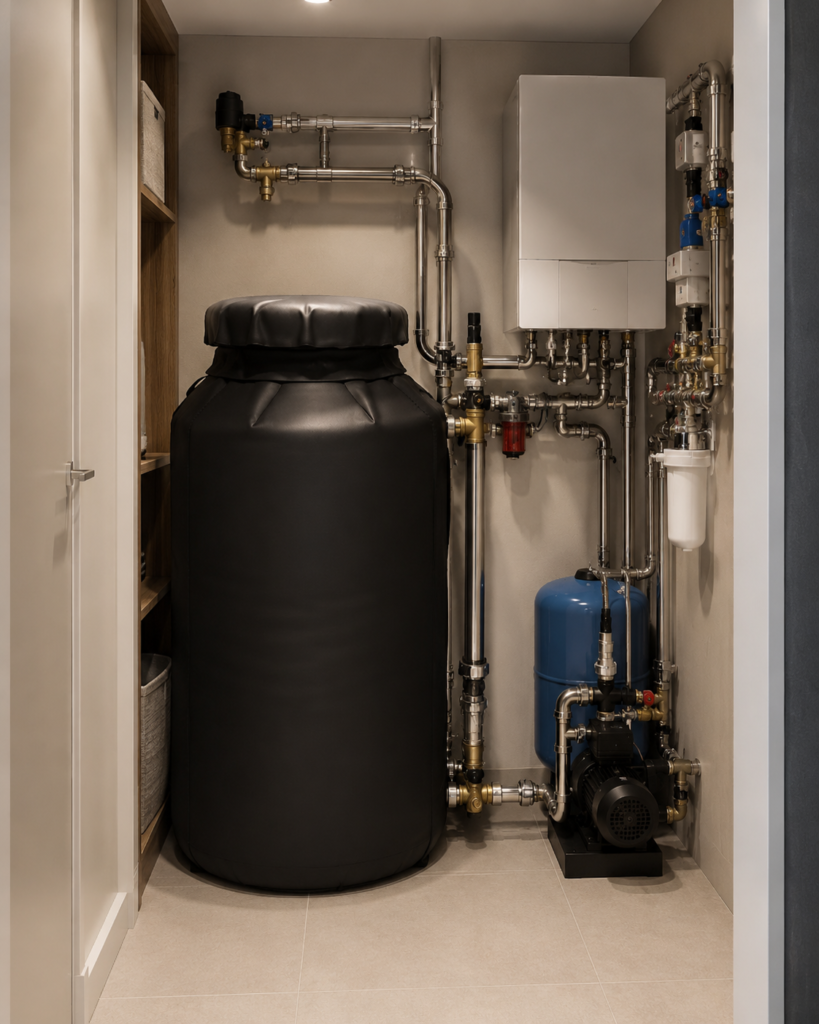
Рішення просте й надійне: у квартирі встановлюють накопичувальний бак об’ємом 200–500 літрів, підключений до загальної водопровідної системи. Поки є вода і тиск — бак постійно залишається повним. Коли тиск падає або вода відключається — автоматика перемикає систему на живлення з резервуару. Ви цього навіть не помічаєте: кран продовжує працювати.
200 літрів — це приблизно два повноцінних душі, кілька циклів готування їжі, вмивання і запас для туалету. Для сім’ї з двох-трьох людей цього вистачає на добу комфортного побуту навіть при тривалому відключенні.
Повноцінна система накопичення води складається з кількох елементів.
Сам бак — поліетиленовий або нержавіючий резервуар, який встановлюють у технічному шафу, у ванній або на балконі.
Насос-підвищувач тиску — подає воду з бака до кранів із нормальним тиском, а не самопливом.
Автоматика і клапани — слідкують за рівнем води в баку, перемикають між міською мережею і резервуаром, захищають від переповнення.
Фільтр грубого очищення — встановлюється на вході, щоб у бак не потрапляло сміття з мережі.
Уся система займає небагато місця: стандартний бак на 200 літрів у горизонтальному положенні вміщується в технічну шафу або нішу у ванній.
Це питання, яке хвилює найбільше. Бак на 200 літрів — це не маленька пляшка, але й не щось, що займе половину квартири. Найпоширеніші місця монтажу: технічний шафа або комора — ідеальний варіант, якщо є хоча б невеликий простір.
Ванна кімната або санвузол — бак розміщують під стелею або за фальш-панеллю. Балкон із утепленням — підходить для квартир, де немає технічних приміщень.
На етапі ремонту розміщення резервуару закладається в проєкт одразу, тому він органічно ховається за оздобленням і не займає корисну площу.
Львів — місто з активною забудовою та будинками у 16–24 поверхи в новітніх ЖК. Разом із тим відключення електроенергії залишаються реальністю, і для мешканців верхніх поверхів кожне таке відключення означає автоматичне відключення води.
Клієнти, які вже встановили резервуари, кажуть одне: «Не розумію, чому не зробив це одразу».
Особливо актуально для сімей із дітьми, людей похилого віку та всіх, хто працює вдома і не може дозволити собі добу без нормальних побутових умов.
Найзручніше і найдешевше встановити резервуар під час ремонту — коли стіни відкриті, труби ще прокладаються і є можливість одразу заховати все за оздобленням. Монтаж у готовій квартирі теж можливий, але складніший. Якщо Ви зараз на етапі ремонту у Львові — це саме той момент, щоб закласти систему раз і назавжди.
Звертайтесь до Дімпробуд — підберемо обладнання і змонтуємо систему під ваш планувальний проєкт.
Так, якщо на вході встановлений фільтр і бак виготовлений із харчового поліетилену або нержавіючої сталі. За бажанням додатково встановлюють фільтр тонкого очищення або УФ-знезараження.
У більшості квартир — один робочий день, якщо система монтується паралельно з ремонтом. У готовій квартирі — 1–2 дні залежно від складності розводки.
Мінімальне: раз на рік промивання бака і перевірка фільтрів. Автоматика і насос не вимагають постійного обслуговування.