Камін у будинку — це давно не просто красива річ для атмосфери. У сучасній оселі правильно встановлений камін із системою розподілу гарячого повітря може опалювати весь будинок. Без газу. Без котла. Без залежності від тарифів. ДімПроБуд вирішив поділитися тим, як це працює на практиці і що ми реально робимо на об’єктах.
Звичайний відкритий камін гріє лише одну кімнату і, чесно кажучи, робить це не дуже ефективно — більша частина тепла йде в трубу. Зовсім інша справа — закрита камінна топка із чавуну або сталі з ККД 75–85%. Вона накопичує тепло і поступово віддає його в приміщення.
Але справжня магія починається, коли до топки підключають систему повітряної розводки — Hydro Air або просто ducted air system. Принцип простий: гаряче повітря від камінної топки не просто виходить в одну кімнату, а розподіляється по будинку через повітроводи. У кожній кімнаті — вентиляційна решітка, через яку заходить тепле повітря. Будинок 150–200 м² можна рівномірно прогріти від однієї топки.
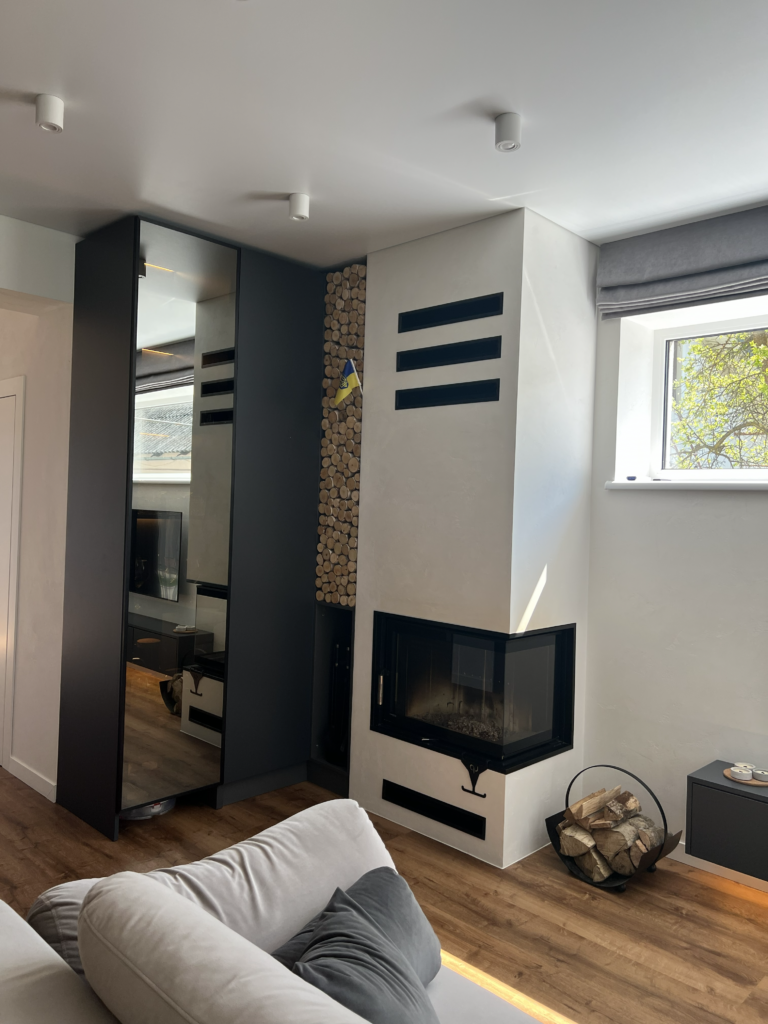
Коли ми монтуємо камін із розводкою на об’єкті, система складається з кількох частин.
Камінна топка — серце системи. Обираємо закриті топки з конвекційною камерою: повітря нагрівається навколо топки і подається у повітроводи. Потужність топки підбирається під площу будинку: зазвичай 10–18 кВт вистачає для будинку 150–200 м².
Повітроводи — металеві або гнучкі термостійкі канали діаметром 100–150 мм, які прокладаємо в міжповерхових перекриттях, стінах або технічних коридорах. Планування розводки — окрема частина проєктування: важливо правильно розрахувати довжину і кількість відгалужень, щоб тиск і температура були рівномірними.
Вентилятор (турбіна) — встановлюється за топкою і примусово подає нагріте повітря по всіх каналах. Без нього система теж працює, але тільки за рахунок природної конвекції — менш ефективно і з меншим радіусом дії.
Решітки й дифузори — кінцеві точки в кімнатах. Можна підібрати під будь-який інтер’єр: від простих металевих до дизайнерських дерев’яних.
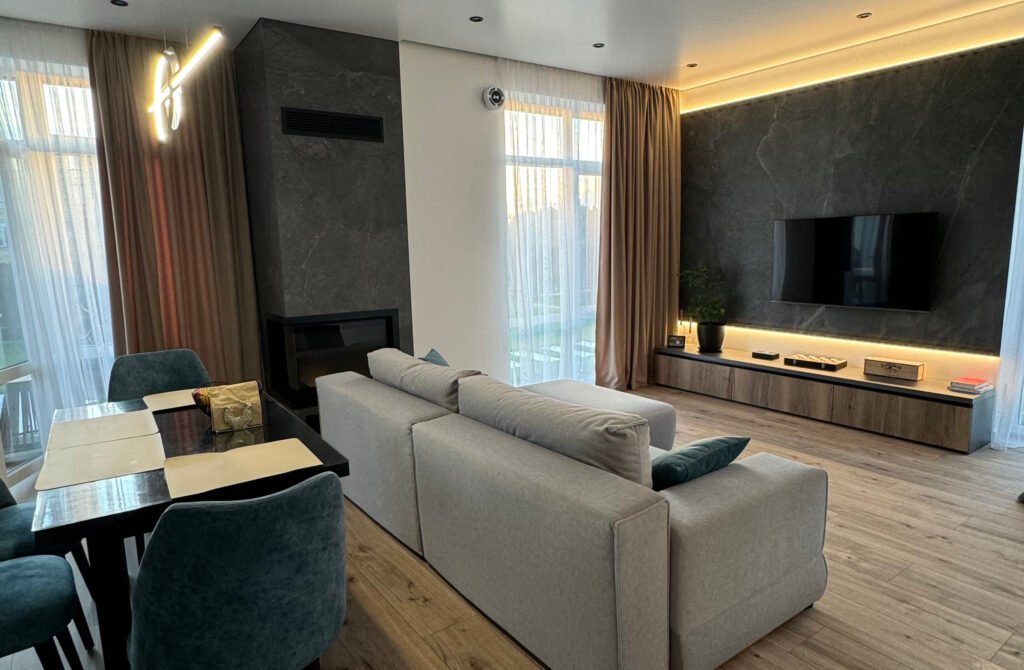
Тут є важливий момент, який багато хто пропускає. Але ДімПроБуд попереджає, система розводки від камінної топки буде ефективною тільки в утепленому будинку. Якщо стіни, підлога і дах добре ізольовані — топки на дровах вистачає як основного опалення. Якщо будинок сильно пропускає тепло — жодна система не натопить його ефективно.
Тому на наших об’єктах ми часто поєднуємо монтаж камінної системи з утепленням. Коли будинок тримає тепло, а камін його рівномірно розподіляє — результат відчувається одразу.
Монтаж камінної топки з системою повітряної розводки на будинок 150–200 м² у Львові — орієнтовно від 80 000 до 150 000 грн залежно від топки, складності розводки і кількості точок. Це разова інвестиція, після якої витрати на опалення — тільки дрова, які цілком доступні.
Порівняйте з газовим котлом, плюс щомісячний рахунок за газ, і математика стає очевидною вже за 3–5 сезонів.
Отже, система «камін + розводка по будинку» — оптимальне рішення для приватного будинку або котеджу від 100 м², де є можливість закласти повітроводи (найзручніше — на етапі будівництва або капітального ремонту). Якщо хочете незалежність від газу, живий вогонь у вітальні і рівне тепло в кожній кімнаті — саме це ми і робимо.
Звертайтесь до Дімпробуд для енергоефективного ремонту в будинку — виїдемо, оцінимо будинок і запропонуємо рішення під Ваш об’єкт і бюджет.
Орієнтовно 8–12 складометрів сухих дров на сезон — залежно від утеплення будинку і температур зими. У добре утепленому будинку витрата суттєво менша.
Так, і це популярна схема. Камін — основне або резервне опалення в холодні дні, тепловий насос — для міжсезоння й автоматичного підтримання температури. Системи не конфліктують між собою.
Обов’язково. Якісний утеплений модульний димохід — частина системи. Правильний переріз і висота димоходу впливають на тягу і, відповідно, на ефективність топки.